

 الإنجليزية
Alumina ceramic wear protection can be economically attractive when a suitable lining reduces the resources needed to keep a defined process operating. That conclusion must come from the application and its records, not from the ceramic purchase price or a general promise of longer life. A lining proposal can look inexpensive while excluding installation, access equipment and replacement stock. Another can appear costly while addressing a recurring maintenance event that the purchasing comparison has overlooked.
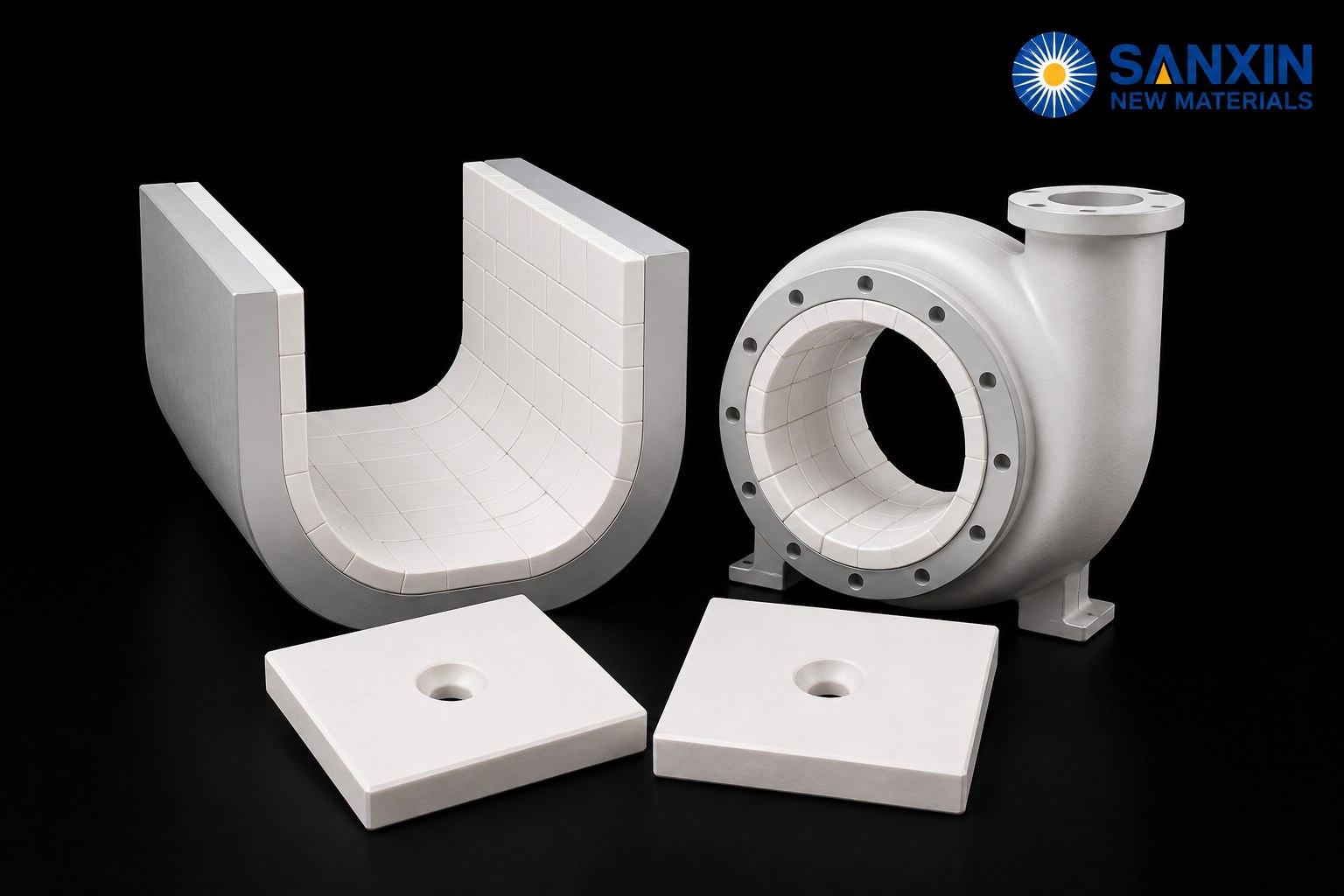
This guide explains how procurement, maintenance and operations teams can build a defensible lifecycle cost assessment. The focus is the purchasing decision: which costs belong in the comparison, what evidence supports an operational benefit, and what remains uncertain. Start by matching the relevant alumina ceramic wear-resistant parts to the equipment duty. Then evaluate the complete installed option against the existing arrangement using a common boundary.
Write the decision in a form that a reviewer can approve or reject. For example: should a defined wear zone be converted during the next planned outage, should an existing ceramic configuration be retained, or should a limited replacement package be purchased for evaluation? These are different decisions. A full conversion requires different funding and exposure than replenishing proven spares.
Give the comparison a version and a review date. Record whether each option assumes the existing equipment layout or includes a design change. When alternatives solve different problems, describe the difference before comparing totals; otherwise, a broader improvement package may be mistaken for an expensive version of the same wear lining.
Record the equipment identity, physical area, required duty and intended evaluation period. State whether the comparison concerns one component, a complete lining system or a production route. Include the current option even if its weaknesses are well known. Without a documented baseline, improvements can be attributed to ceramic when they actually came from a redesigned transfer point, different feed or a broader overhaul.
Separate the technical release from the economic review. An attractive financial estimate does not establish suitability for impact, temperature, chemistry, retention or access constraints. Ask the responsible engineering team to identify unacceptable conditions before purchase options are ranked by cost. A technically unsuitable option should not become acceptable merely because its quotation is lower.
Alumina identifies a material family, not a complete wear protection specification. CeramTec's aluminum oxide material overview describes different alumina grades and microstructures, along with hardness and wear resistance, and lists wear protection tiles among its applications. That supports considering alumina for relevant wear duties. It does not establish a Sanxin product's service interval or an economic result at a particular plant.
For a purchasing comparison, identify the proposed ceramic grade, geometry, backing, attachment arrangement and dimensional requirements. The commercial unit also matters. A price per tile cannot be compared directly with a price for a finished lined assembly. Clarify whether joints, edge pieces, fastening provisions and inspection documentation are included.
Keep generic material descriptions out of the savings calculation. Hardness is not a currency value, and a nominal composition does not tell the buyer how many maintenance events will disappear. Product properties inform technical selection; installation scope and operating evidence inform the cost assessment. Connecting those two reviews requires a defined application rather than an assumed performance multiplier.
A lifecycle view considers more than acquisition. The NIST life-cycle costing handbook, written for the Federal Energy Management Program, distinguishes initial investment from future operation, maintenance, repair, replacement and residual values. Its federal facility context is not a ceramic procurement standard. The useful principle here is to identify when relevant costs occur, then apply the buyer's approved financial rules consistently.
Choose an evaluation period that reflects the actual decision, such as the remaining planned use of the equipment or a defined production campaign. Do not extend the period solely to make one proposal look better. Where future equipment use is uncertain, show the shorter supported case separately from a longer scenario.
Use the same currency basis, treatment of taxes and cost ownership for every alternative. Finance should set any discounting, escalation or accounting assumptions. Record exclusions explicitly. If disposal, structural modifications or lost production are outside the available estimate, describe them as unquantified items rather than silently assigning zero. A comparison with visible gaps is more useful than an apparently precise total built on missing data.
Begin with actual work orders, purchase records, stores issues and operating logs. Link these records through equipment and event identifiers. A maintenance invoice alone may cover several assets; a shutdown log may include inspection and unrelated repair work. Allocate costs only when the allocation has a reasonable basis and can be checked.
For each relevant event, capture the wear-related reason, replaced items, people and services used, access requirements, actual elapsed duration and production condition. Mark whether the event was planned or unplanned. Preserve a description of what the cost includes so that the next reviewer can distinguish a complete replacement from a local repair.
Do not select only the worst historical event. Show unusual events separately and explain why they may or may not represent future exposure. A major obstruction, changed raw material or unrelated plant failure can distort a simple average. Where records are incomplete, use a documented range and identify the missing evidence. The purpose is to construct a credible comparator, not to maximize the apparent benefit of a new lining.
Request a scope breakdown that follows the physical work. Useful headings include supplied ceramic, backing or carrier components, fastening or bonding materials, packaging, transport, receiving checks, preparation, fitting, inspection and commissioning support. Different suppliers may bundle these items differently; the comparison should reconcile those boundaries before ranking quotations.
For proposed wear-resistant ceramic lining components, ask which pieces are standard and which depend on approved drawings. Clarify the treatment of cut pieces, edge details and replacements for damaged items received on site. Also establish who verifies quantities and who resolves dimensional mismatches before installation.
A quotation may exclude the removal of the existing lining or repair of its supporting surface. Those tasks can remain necessary even when the new ceramic is supplied as a complete package. Record them on the buyer's side of the estimate. Compare the total work required to reach the same accepted operating condition, while retaining the original supplier quotations as evidence rather than rewriting their commercial scope.
Maintenance improvements can create different kinds of value. Avoided emergency freight or fewer purchased replacement components may reduce expenditure directly. Fewer internal labor hours may instead release people for other work while payroll remains unchanged. Both can matter, but they should not be described as the same cash saving.
Ask maintenance management what will happen to any released capacity. It might reduce contractor demand, clear a documented backlog or improve scheduling flexibility. If no redeployment plan exists, describe the result as a potential capacity benefit. Do not convert every estimated hour into a reduction in the operating budget.
Keep labor quantities separate from cost rates. This allows the team to update wage, contractor or overtime assumptions without changing the recorded maintenance experience. It also makes the estimate easier to challenge constructively: reviewers can discuss whether an event is avoidable independently of the financial rate assigned to it. Such separation is especially valuable when comparing work performed by internal teams with a supplier-installed package.
A component being unavailable does not necessarily mean that saleable production was lost. Buffer storage, parallel equipment, demand conditions or later recovery may change the consequence. Operations should identify whether the affected equipment constrained the process during each event and whether missed output was recovered.
Do not multiply every maintenance hour by a general revenue figure. Ask the responsible business team to approve the relevant loss basis and document why it applies. Keep reduced output, delayed output and permanently lost output distinct. Where the commercial consequence cannot be supported, report the unavailable hours as an operating measure without assigning an invented monetary amount.
Check for overlapping entries before adding totals. Contractor costs may already be included in a shutdown estimate. Production loss may already account for restart material. A broad outage cost rate may include labor or utilities that also appear elsewhere in the worksheet. Give each cost a single home, and record the allocation rule. This prevents a ceramic proposal from appearing to deliver several benefits that are actually different labels for one avoided event.
Two calendar periods can contain very different operating exposure. Record the amount and type of material handled, operating hours, planned idle periods and relevant process changes alongside maintenance expenditure. A lower annual cost during reduced production is not, by itself, evidence of a better lining.
Cost per unit of comparable throughput can help show operating intensity, but the denominator must have a clear definition. Specify whether it refers to feed, transferred material or accepted output, and avoid combining different products simply because they share a reporting unit. Retain the absolute expenditure as well; a normalized measure does not replace the budget view.
Review unusually favorable and unfavorable periods rather than deleting them automatically. If a feed change, process adjustment or major overhaul occurred, annotate the comparison and consider whether the observations remain comparable. The resulting conclusion may be conditional: the option looks promising for a defined duty, while another duty still lacks evidence. That is more informative for purchasing than an unsupported claim that the same saving applies everywhere.
Do not include an energy saving just because a new surface appears smoother or a component is lighter. If energy is a material decision factor, ask the plant's responsible specialists to define the measurement boundary and identify the variables that must be recorded. Compare like operating conditions and distinguish the proposed wear protection change from simultaneous equipment or control changes.
Product-quality benefits need similar discipline. If reduced contamination, fewer rejected batches or less rework is part of the proposal, define the relevant acceptance measure and obtain actual quality records. A statement about ceramic composition cannot establish that the finished process will meet a particular product specification.
Until suitable evidence exists, keep these benefits outside the base financial result and list them as evaluation questions. The same applies to environmental claims. Longer use or reduced replacement may be worth investigating, but a carbon or resource reduction figure requires its own boundary, inputs and substantiation. A wear protection purchase should not acquire unsupported sustainability claims simply because its maintenance case appears favorable.
The economic comparison should consider how the plant will recover from a damaged or worn section. Ask whether individual pieces, modules or the complete assembly must be replaced. Identify any special parts that cannot be substituted from existing stock, and connect these requirements to the proposed bill of materials.
Discuss spare quantities with the maintenance and stores teams using actual lead times and operational consequences. More inventory is not automatically better protection, and less inventory is not automatically a saving. An unused spare may remain valuable for future support, or become stranded if the design changes. Show the assumption rather than treating every stocked item as consumed.
When comparing modular wear-resistant ceramic parts, include the proposed replacement scope in the commercial review. A design that allows localized renewal should be assessed with its actual access and compatibility requirements. Do not assume that a smaller replacement component creates a shorter outage; preparation, isolation, inspection and restart activities may still determine the duration.
Separate supported facts from assumptions in the worksheet. Quoted supply prices, recorded maintenance quantities and confirmed installation scope belong in one category. Future replacement frequency, production consequence and uncertain spare demand belong in another. Each important assumption should have an owner and a reason for the selected range.
Compare a conservative scenario with the central estimate and a favorable scenario. Change the assumptions that could realistically alter the decision, rather than applying one arbitrary percentage to every cost. If the proposal is attractive only when all favorable assumptions occur together, the result should be treated as fragile.
A useful threshold question is: how much additional installed cost could the supported avoided expenditure justify within the chosen period? Another is: how many relevant maintenance events must be avoided before the alternatives become comparable? Use the plant's own reviewed inputs, and keep fractional mathematical results separate from the discrete events that can actually occur. Thresholds help identify the evidence worth obtaining before a large order.
When uncertainty dominates, the next decision may be a limited evaluation rather than immediate full conversion. Choose a scope that can answer the specific commercial question while meeting the site's engineering and safety requirements. For example, the unresolved issue may concern fitting effort, the completeness of the supplied package or the practicality of localized replacement.
Define the information to be collected before placing the order. Allocate responsibility for time records, issued materials, condition documentation and operating exposure. State which findings would support continuation, require revision or end the evaluation. Avoid moving the acceptance criteria after seeing a favorable result.
Keep the evaluation budget separate from the expected recurring cost of an established arrangement. First-time surveying, drawing approval and learning activities may not repeat in the same form. Conversely, later installations may still require work that the first sample received as unpriced supplier support. Capture both distinctions. Never extend operation beyond approved inspection or intervention limits simply to improve a cost comparison.
A well-prepared estimate can still lose credibility when additional work is recorded without a clear reason. Establish how the site will document discoveries after the old lining is removed. Distinguish pre-existing damage, drawing discrepancies, a changed operating requirement and a supplier nonconformance. These causes should not automatically be charged to the same comparison category.
For each proposed change, record the affected location, required action, added quantity, scheduling consequence and approving person. Retain the original scope alongside the revision. A revised final invoice alone cannot explain whether the initial proposal was incomplete or the plant introduced a new requirement after ordering.
Discuss substitution control as well. A replacement backing, different tile geometry or altered attachment detail can affect the technical basis on which the purchase was approved. Obtain the appropriate engineering and commercial review before accepting a substitution. A short-term price adjustment is not enough to establish equivalence.
At handover, reconcile the installed configuration, remaining spares and unresolved items with the approved purchase package. This creates a reliable reference for future reorders. It also prevents an apparently economical repeat purchase from supplying an earlier configuration that no longer matches the equipment.
A concise approval package should let a reviewer trace the recommendation without reconstructing every work order. Present the defined duty, qualified options, installed scope, baseline evidence, principal assumptions and comparison period. State whether the recommendation is full purchase, limited evaluation, revision or no change.
List quantified expenditure separately from operational benefits that have not been monetized. Show unresolved technical matters and commercial exclusions near the recommendation, not buried in supporting notes. Assign an owner and resolution point to every issue that could change the order or acceptance decision.
After implementation, reconcile actual invoices and work records with the estimate. Explain deviations such as additional substrate repair, changed quantities or installation delays. Revisit the operating comparison when sufficient relevant exposure exists, keeping the original decision assumptions intact for reference. This closes the learning loop without claiming that an approved forecast has already become a realized saving.
Not necessarily. First compare technically suitable alternatives with equivalent supplied and installed scope. Then assess the evidence-supported costs within the same period. If important installation or replacement items are missing, the price ranking is incomplete. A higher quotation also requires justification; it should not be accepted on a general claim of premium performance.
Use an external example to identify questions, not to populate a guaranteed result. Equipment duty, baseline condition, cost rates and accounting boundaries may differ. Ask what evidence supports the comparison and whether it is relevant to your application. Build the approval case from your own defined assumptions and available records.
Identify the missing fields and distinguish confirmed expenditure from estimates. A bounded evaluation can improve the information needed for the next decision. Avoid replacing gaps with zero or selecting unsupported industry averages merely to finish the worksheet. State the level of uncertainty clearly and size the purchasing commitment accordingly.
Prepare the equipment drawing, material duty, current wear protection arrangement, maintenance event summary and proposed purchasing boundary. Use the Sanxin wear-resistant parts range to identify the relevant product family, then request a configuration-specific scope and supporting information. A useful enquiry asks what is included, what remains to be confirmed and what evidence would support the decision, rather than requesting an unqualified savings promise.

قدم طلبك،
سنتصل بك في أسرع وقت ممكن

شركة سانشين للمواد الجديدة، المحدودة تركز على إنتاج وبيع الخرز الخزفي وأجزاء مثل وسائط الطحن، والخرز الناسف، والكرة الحاملة، والجزء الإنشائي، والبطانات المقاومة للتآكل الخزفي، والجسيمات النانوية المسحوق النانوي


 الإنجليزية
 الروسية
 الفرنسية
 الإسبانية
 البرتغالية
 العربية